


16/11/2026 - 21/03/2026
International Group Exhibition
Opening: November 16 / 8pm
Many of today’s crises and social inequalities stem from the logic of capitalist patriarchy, a system based on domination, exploitation and control over women, Others and nature. This interwoven political hierarchy relegates the rights of those excluded from the canon to a lower status. On the other hand, growing awareness of the dominance of patriarchal and white racist attitudes, which render others inferior “because of their unchanging basic natures” presupposes and encourages the formation and creation of a community committed to caring for the state of the world and the conditions within it, with the intention of intervening and bringing about change. Philosopher Rosi Braidotti calls for a move away from anthropocentrism toward an understanding of life as a network of interconnected human, nonhuman, and technological forces. From the perspective of posthumanist feminism, the struggle for women’s rights thus aspires towards de-identification and the search for another humanity, new ethical affirmative relations that break down the hierarchy between humans and Others and reinforce interdependence, recognise equality among species, and foster a more collaborative sense of interdependence between humans and animals, plants, the Earth and the planet as a whole. In other words, as Braidotti says: women, LGBTQ+, animals, Black people, post-colonials, bacteria, Others, extraterrestrials[1], part of the multitudes excluded from official history and culture.
Women, Animals, Postcolonials, Bacteria, Others, and the Disturbed Waters is, in fact, an exhibition essay that sets out from an assumption and presents a commitment to new forms of ecological and ethical responsibility and collective care extending beyond the human. Its underlying assumption is that a better world requires new ethical relationalities that will disrupt the hierarchy between humans and Others and strengthen interdependence. This commitment takes the form of a visual framework bringing together works by artists from different times, periods, geographies and genders. Starting from what we have in common, as bodies of water, our wateriness that makes us more-than-human, on both a material and a conceptual level, the artists seek to address the exploitation of water not only as an ecological problem, but as a crisis of relationships, responsibility and the overall organisation of life. According to Astrida Neimanis, we are all bodies of water[2], a notion that can be understood as a political, ecological and ethical issue challenging the idea of human beings as autonomous subjects standing apart from nature. The privatisation, commodification, pollution and excessive extraction of water speak to the broader treatment of the living world as an unlimited resource, as well as to power and to social inequality. Against this logic, the exhibition invites us to look at water as a shared and relational state of existence, a medium of interdependence and a material force that connecting human and more-than-human worlds.
Bringing together the artistic practices of Ursula Biemann, Carolina Caycedo, Verica Kovacevska, Minerva Cuevas, Ivana Mirchevska, Darinka Pop-Mitić and Robertina Šebjanič, this exhibition explores the many ways in which water becomes a site of ecological, social and political struggle. Through video, installation, sound, research-based practices and visual interventions, the artists examine the exploitation and commodification of water, the infrastructures that control its movement, and the consequences of environmental degradation for both human and non-human communities. Their works reveal the entanglements of extractive economies, colonial legacies and capitalist systems, while simultaneously challenging the anthropocentric view of nature as a resource available for unlimited consumption. Rather than treating water as a passive landscape or an inexhaustible commodity, the exhibition invites us to reconsider it as a living, interconnected and vulnerable entity. It raises questions about how we might listen to its histories, recognise its active role, and imagine alternative forms of coexistence rooted in interdependence, responsibility and care.
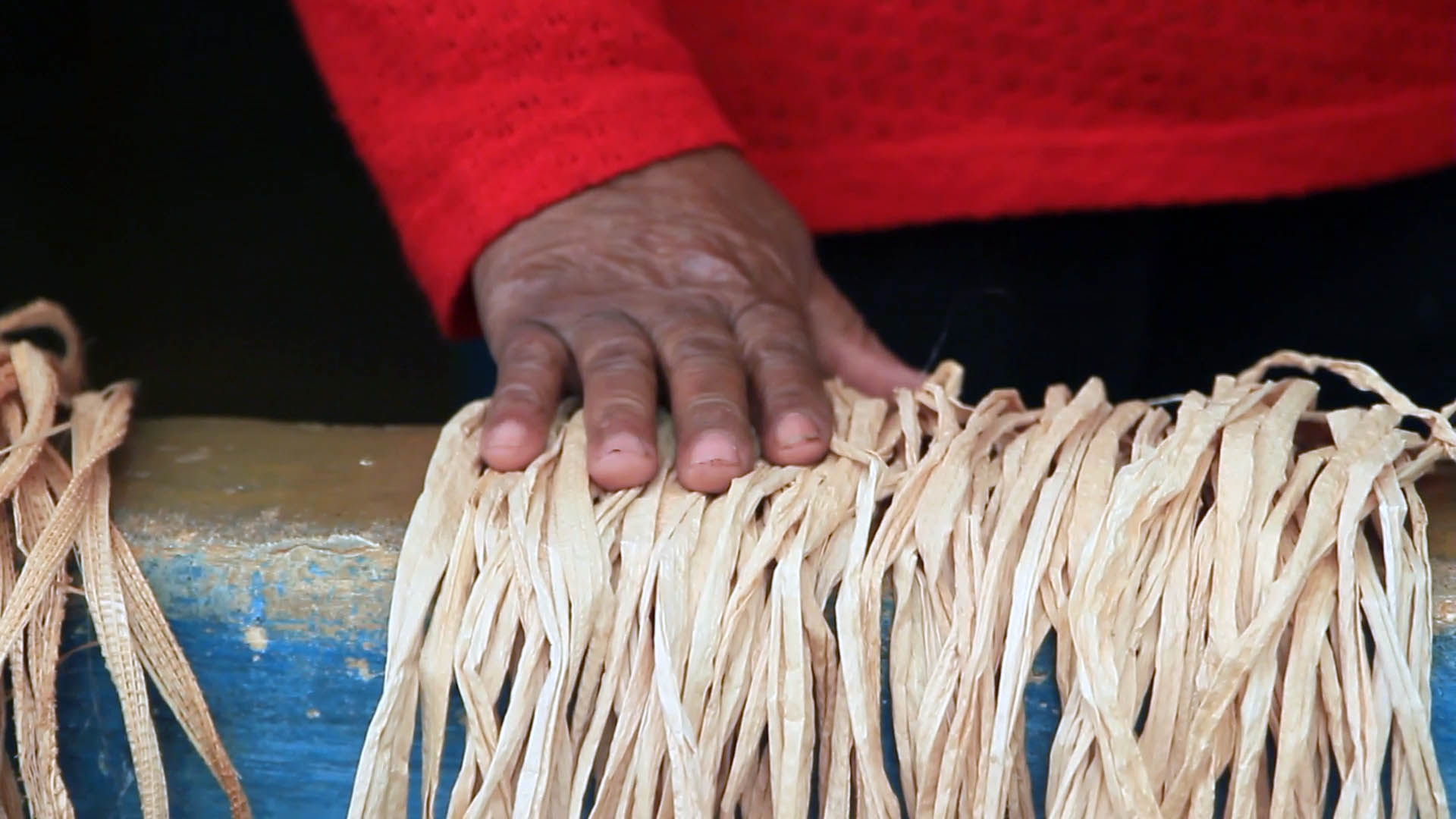
The works of Carolina Caycedo and Minerva Cuevas address the exploitation of water as a public good. In her video work A Gente Rio, Caycedo explores the extractive industries and environmental disasters resulting from the construction of several hydroelectric power plants in Brazil, as well as the various resistance movements and efforts led by the indigenous communities living in the surrounding areas. In her installation Égalité, Cuevas examines the privatisation and commodification of public resources, contrasting these practices with the idea of water as a public good intended for all. In this work, she reinterprets the bottled water brand Evian, replacing its name with the word “égalité”. Meanwhile, Ursula Biemann’s video subatlantic highlights the melting of glaciers driven by global climate change and the resulting severe ecological imbalances, while also exploring the potential these changes hold for new genetic futures. In her installation Echoes from the Abyss, Robertina Šebjanič addresses the critical yet frequently overlooked issue of chemical weapons dumped on the seabed, which disrupt biodiversity, the chemical composition of water, and ecological balance.
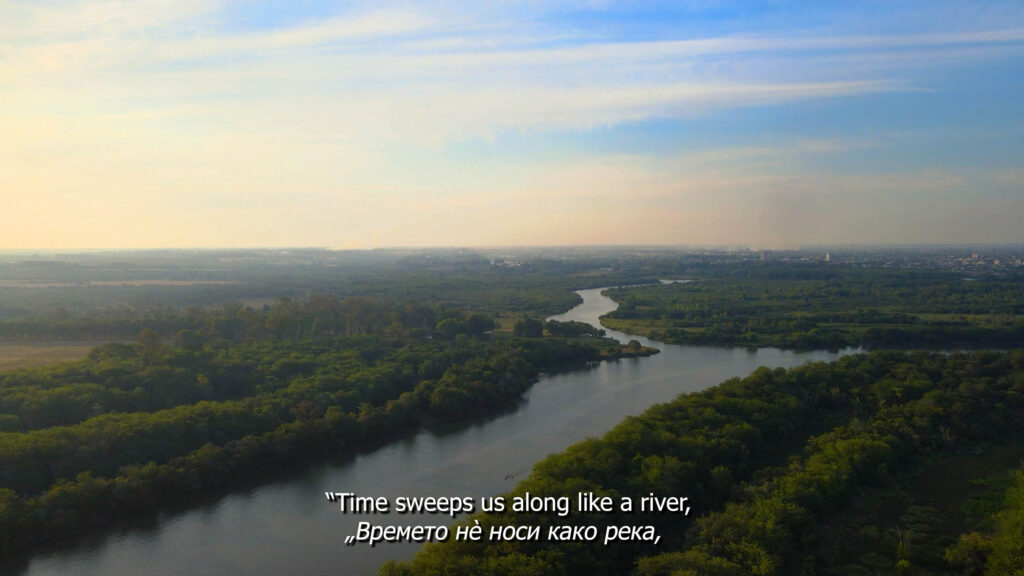
Verica Kovacevska, River Time, (Video still by the courtesy of the Artist)
In her video-poem titled River Time, through her meeting with the Uruguay River, Verica Kovacevska explores time through our relationship with our own bodies, nature, and indigenous thought, calling for a slowing down as a counter-process to the accelerated pace of capitalism. In her mural titled Didara, Darinka Pop Mitić draws on the life story of Didara Dukagjini Gjorgjević, a teacher from Prizren who later became a professional politician and official in Yugoslavia’s provincial and federal administrations. Through her story, Pop Mitić addresses the Ljomza/Bistrica River in Prizren and its significance to the city. More specifically, the water flowing down from the mountains through a network of shared channels across the city was subject to the collective care of its citizens, who managed this common resource with diligence and for the benefit of all. Meanwhile, Ivana Mirchevska’s installation, The Raft of the Mimlikvias, adopts a speculative perspective from the future to explore a “wet future” and the implications of climate change, including intensified hydrological cycles, increased rainfall, melting ice and the expansion of wetland systems, all of which are reshaping landscapes, biodiversity and human infrastructure. Through imagined forms of bodily intelligence called Mimlikvias, she raises questions about how our bodily experiences and relationships change when the world around us and within us becomes fluid.
Another part of the exhibition is a selection of works from the MoCA – Skopje collection, brought together under the title “landscapes are no longer just landscapes”. These waterscapes place water at the center, while also foregrounding works by women artists. Bringing historical representations of waterscapes and landscapes by women artists into dialogue with contemporary artistic practices, the exhibition traces changing perceptions of water across different historical and political contexts. Moving between water as an object of aesthetic contemplation and water as a contested territory shaped by extraction, privatisation and environmental violence, it examines how our relationship with this essential element is constructed and transformed. This historical comparison also opens up a feminist perspective on the representation of nature, questioning gendered associations between women, bodies and the natural world, while reclaiming art histories that have often remained on the margins of dominant narratives. Rather than presenting a linear transition from the picturesque landscape to ecological crisis, the exhibition brings different temporalities and forms of knowledge into conversation, asking how water carries histories of exploitation, memory, resistance and interdependence.
[1] Rosi Braidotti, Posthuman Feminism, (Polity Press, 2022); https://www.youtube.com/watch?v=drLsM1T_Zm0
[2] Astrida Neimanis, Bodies of Water: Posthuman Feminist Phenomenology (Bloomsbury Academic, 2017)
Curator: Ivana Vaseva
Artists: Ursula Biemann (Switzerland) | Carolina Caycedo (UK | USA / Puerto Rico) | Verica Kovacevska (North Macedonia / Switzerland) | Minerva Cuevas (Mexico) | Ivana Mirchevska (North Macedonia) | Darinka Pop-Mitić (Serbia) | Robertina Šebjanič (Slovenia), alongside artworks from the MoCA – Skopje collection by artists Kate Antypa, Alessandra Bonelli, Tonia Nicolaidoy, Katja Evtimova, Ann McCall, Aneta Svetiva
Exhibition Design: Dimitar Milev in collaboration with Ivana Vaseva
Design Collaborator: Iliana Petrushevska
Production Collaborators: Dimitar Milev, Denis Saraginovski, Nevenka Nikolikj, Iva Dimovski, Ana Trajkovska, Martin Manev
Cover photo: Carolina Caycedo, A Gente Rio, (Courtesy of the Artist, Commonwealth and Council and Instituto de Vision – New York, Bogotá)
The exhibition is part of the annual program of the Museum of Contemporary Art – Skopje, supported by the Ministry of Culture and Tourism of the Republic of North Macedonia.
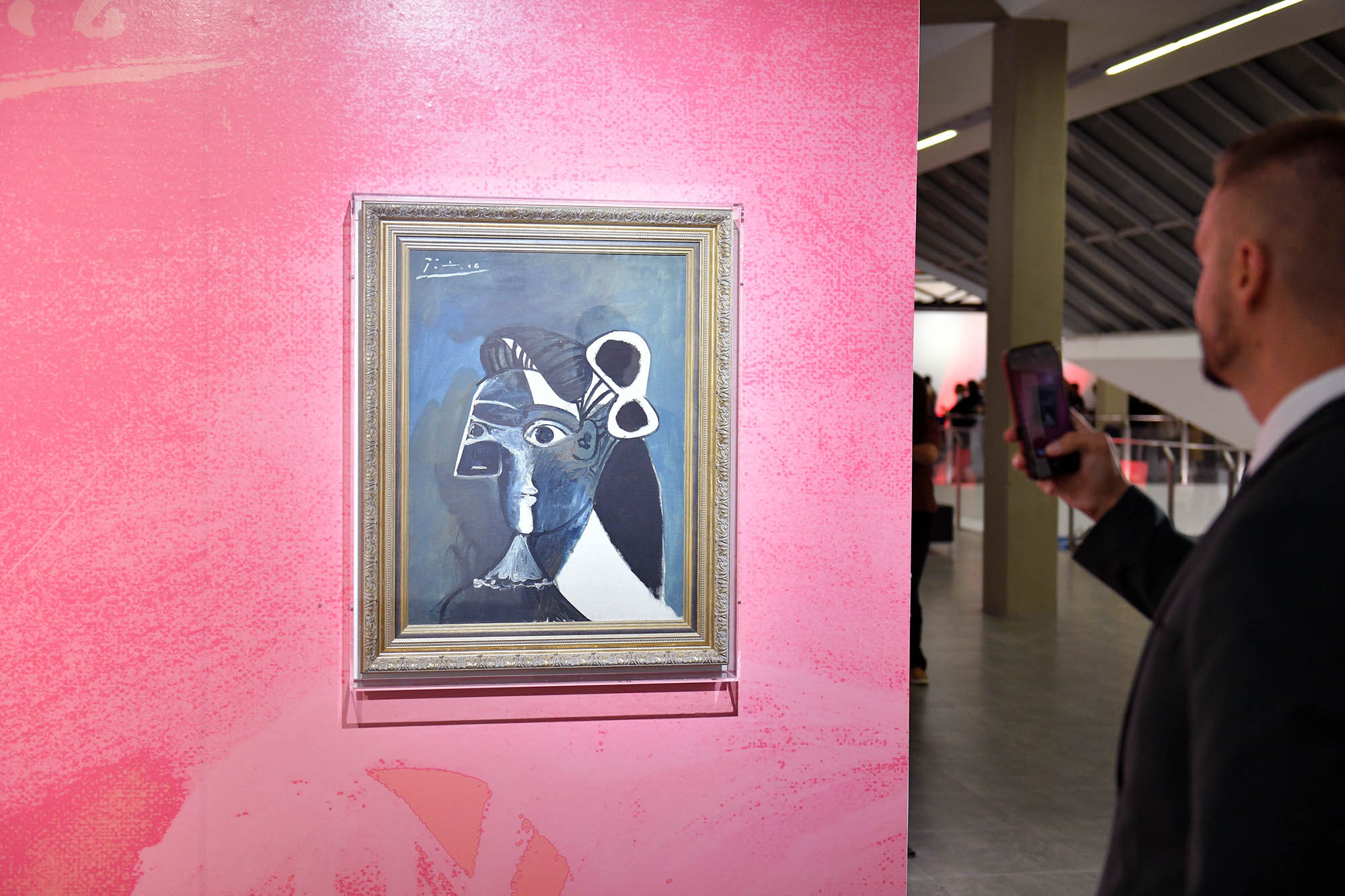
PICASSO, IMAGE OF THE MUSEUM: Works from the Collection of MoCA-Skopje
14/10/2026 - 28/10/2026
SOLIDARITY AS A FUTURE
29/09/2026 - 28/10/2026

BLAGOJA MANEVSKI Retrospective
23/09/2026 - 08/11/2026

LAZE TRIPKOV: Immersive Transformation of the Glagolitic
21/08/2026 – 05/09/2026

